

The way people search online is changing faster than ever. For years, website owners focused on ranking on Google and attracting organic traffic through SEO. However, the rise of AI-powered search experiences has changed how users find information.
Today, tools like ChatGPT, Google AI Overviews, Microsoft Copilot, and Perplexity AI often provide direct answers without requiring users to click through to websites. As a result, many publishers and bloggers are seeing fewer clicks even when their pages rank well in search results.
Does this mean blogging is dead? Absolutely not.
While traditional SEO is evolving, there are still many opportunities to grow traffic, build authority, and earn money online. In this guide, you’ll learn why Google Search is losing clicks to AI and the nine best strategies website owners can use to continue making money in 2026.
Why Is Google Search Sending Fewer Clicks?
Google’s goal has always been to provide users with answers as quickly as possible. With AI-powered search, users often receive complete summaries directly on the search results page.
Instead of clicking several websites, users can now get:
- Quick answers
- Product comparisons
- How-to guides
- Definitions
- Summaries
- Buying recommendations
This creates what marketers call zero-click searches, where users never visit the original website.
Although this reduces traffic for some publishers, it also creates opportunities for websites that provide deeper, original, and experience-based content.
What Is AI Search?
AI search combines traditional search engines with artificial intelligence to generate conversational answers.
Popular AI search platforms include:
- ChatGPT Search
- Google AI Overviews
- Microsoft Copilot
- Perplexity AI
- Claude AI
- Gemini
These platforms summarize information from multiple sources, helping users find answers more quickly.
Is Blogging Still Worth It in 2026?
Yes.
The blogging industry is changing—not disappearing.
AI can answer simple questions, but it still relies heavily on websites that publish:
- Original research
- Real-world experience
- Expert opinions
- Product testing
- Case studies
- Industry insights
If your content offers genuine value, readers and AI systems will continue to reference it.
1. Create Original Content AI Can’t Copy
Generic articles are becoming less valuable because AI can generate similar information in seconds.
Instead, focus on creating content based on:
- Personal experience
- Original research
- Interviews
- Case studies
- Surveys
- Customer success stories
- Real screenshots
- Data analysis
Unique content has a much better chance of being recommended by both Google and AI search engines.
2. Build a Personal Brand
People trust people more than anonymous websites.
Share your expertise through:
- YouTube
- X (Twitter)
- Newsletters
- Podcasts
- Public speaking
- Community discussions
A strong personal brand makes readers search specifically for your content rather than relying only on Google.
3. Diversify Your Traffic Sources
Depending entirely on Google traffic is risky.
Instead, grow visitors through multiple channels:
- Email marketing
- YouTube
- Quora
- Direct traffic
The more diversified your audience, the less impact AI search changes will have on your business.
4. Focus on Topics AI Cannot Fully Answer
Some searches require human experience and detailed explanations.
Examples include:
- Product reviews after long-term use
- Local business guides
- Industry case studies
- Step-by-step tutorials with screenshots
- Business experiments
- Success stories
- Original opinions
These topics encourage users to visit your website instead of relying only on AI summaries.
5. Build an Email List
Email remains one of the highest-converting marketing channels.
Unlike search traffic, you own your email audience.
Offer valuable resources such as:
- Free guides
- Checklists
- Templates
- Prompt libraries
- Newsletters
- Exclusive tutorials
An engaged email list helps generate repeat visitors and long-term revenue.
6. Create Digital Products
Don’t rely only on display ads.
Sell digital products such as:
- eBooks
- Online courses
- AI prompt collections
- Website templates
- SEO checklists
- Business planners
- Content calendars
Digital products generate income even if search traffic fluctuates.
7. Use AI to Improve Productivity
Instead of competing against AI, use it to work faster.
AI can help you:
- Research topics
- Create outlines
- Brainstorm headlines
- Write first drafts
- Generate FAQs
- Improve readability
- Optimize SEO
This allows you to publish more high-quality content while spending less time on repetitive tasks.
If you’re new to AI, our guide on Make Money with ChatGPT explains how beginners are building profitable online businesses using AI-powered tools.
8. Optimize for AI Search and Google
Traditional SEO is evolving into Answer Engine Optimization (AEO) and Generative Engine Optimization (GEO).
Modern websites should include:
- Clear headings
- FAQ sections
- Schema markup
- Original statistics
- Expert insights
- Internal linking
- Updated information
- Fast loading pages
These improvements increase the likelihood that AI systems will reference your content.
9. Monetize Beyond Display Ads
Advertising revenue alone may not be enough in the future.
Successful website owners combine multiple income streams, including:
- Affiliate marketing
- Sponsored content
- Memberships
- Premium newsletters
- Consulting
- Freelance services
- Digital products
- Online courses
Diversifying revenue creates a more sustainable business.
How AI Is Changing SEO
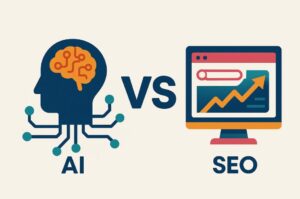
SEO isn’t disappearing—it is evolving.
In 2026, successful websites focus on:
- Helpful content
- First-hand experience
- Topical authority
- User satisfaction
- Strong branding
- High-quality backlinks
- Structured data
- Fast user experience
Google continues to reward websites that demonstrate Experience, Expertise, Authoritativeness, and Trustworthiness (E-E-A-T).
Can AI Replace Websites Completely?
No.
AI depends on websites to learn from and reference information.
Without publishers creating valuable content, AI systems would have no reliable information to summarize.
Websites that publish:
- Original research
- Expert knowledge
- Updated information
- Visual guides
- Videos
- Interactive tools
will continue to play an essential role in the internet ecosystem.
Future-Proof Your Website in 2026
Website owners should prepare for an AI-first internet by focusing on long-term value rather than short-term traffic.
Your strategy should include:
- Publishing original content consistently
- Building an email list
- Creating digital products
- Investing in personal branding
- Diversifying traffic sources
- Updating old content regularly
- Optimizing for AI search
- Building a loyal community
Frequently Asked Questions
Is Google Search really losing clicks to AI?
Yes. AI Overviews and conversational AI platforms increasingly answer user questions directly, reducing clicks for many informational searches. However, websites with unique, in-depth content still attract valuable traffic.
Is blogging still profitable in 2026?
Yes. Blogging remains profitable when combined with diversified monetization methods such as affiliate marketing, digital products, consulting, newsletters, and sponsorships.
How can website owners adapt to AI search?
Focus on publishing original, experience-based content, optimize for AI search, build an email list, strengthen your brand, and reduce dependence on a single traffic source.
Should I stop doing SEO?
No. SEO is still important, but it should be combined with AEO, GEO, content quality, branding, and audience building.
Final Thoughts
AI is transforming how people discover information, and Google Search is no longer the only gateway to website traffic. While AI-powered search experiences have reduced clicks for many publishers, they have also created new opportunities for creators who focus on originality, expertise, and value.
Rather than competing with AI, use it to improve your workflow, publish better content, and expand your business beyond search traffic alone. Websites that embrace AI, build strong brands, diversify revenue, and prioritize helpful content will continue to grow in 2026 and beyond.